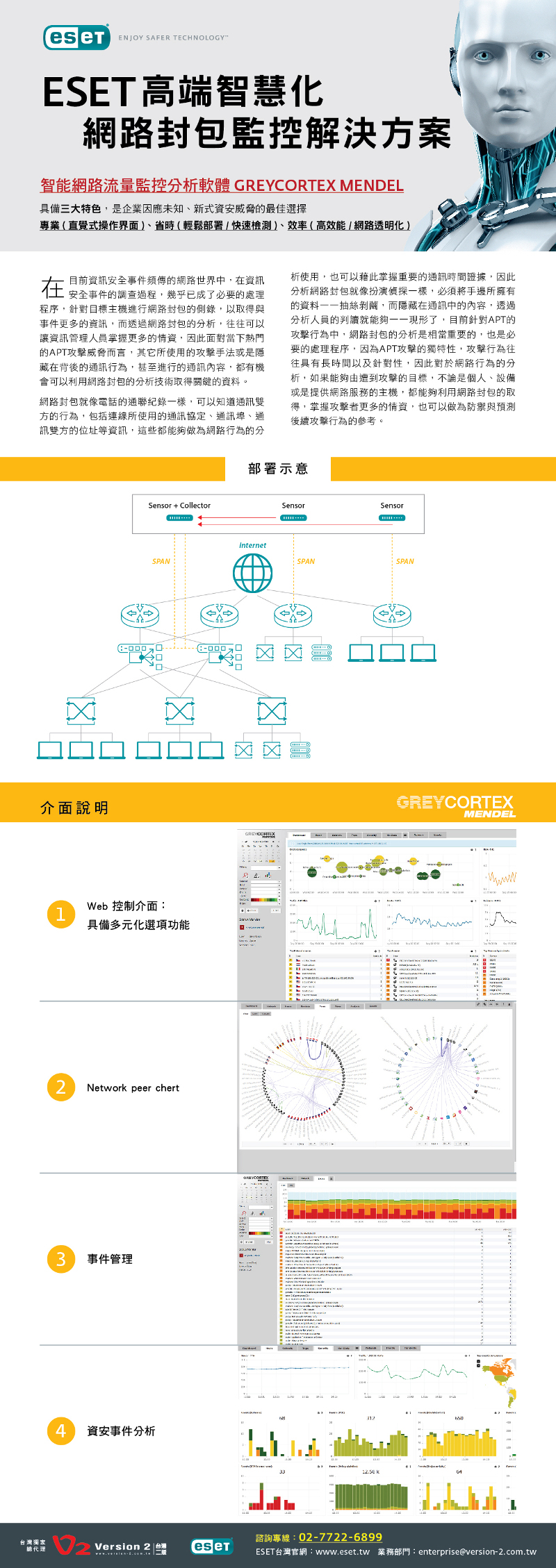
IT-SA is Europe’s leading trade fair for IT security. Held in the German city of Nuremberg over October 9-11, it features over 630 presenters in three halls, in diverse areas like mobile, cloud, network, and data security. It also offers an additional day of expert speakers in the field of IT Security. GREYCORTEX will attend for the second time attending the show.
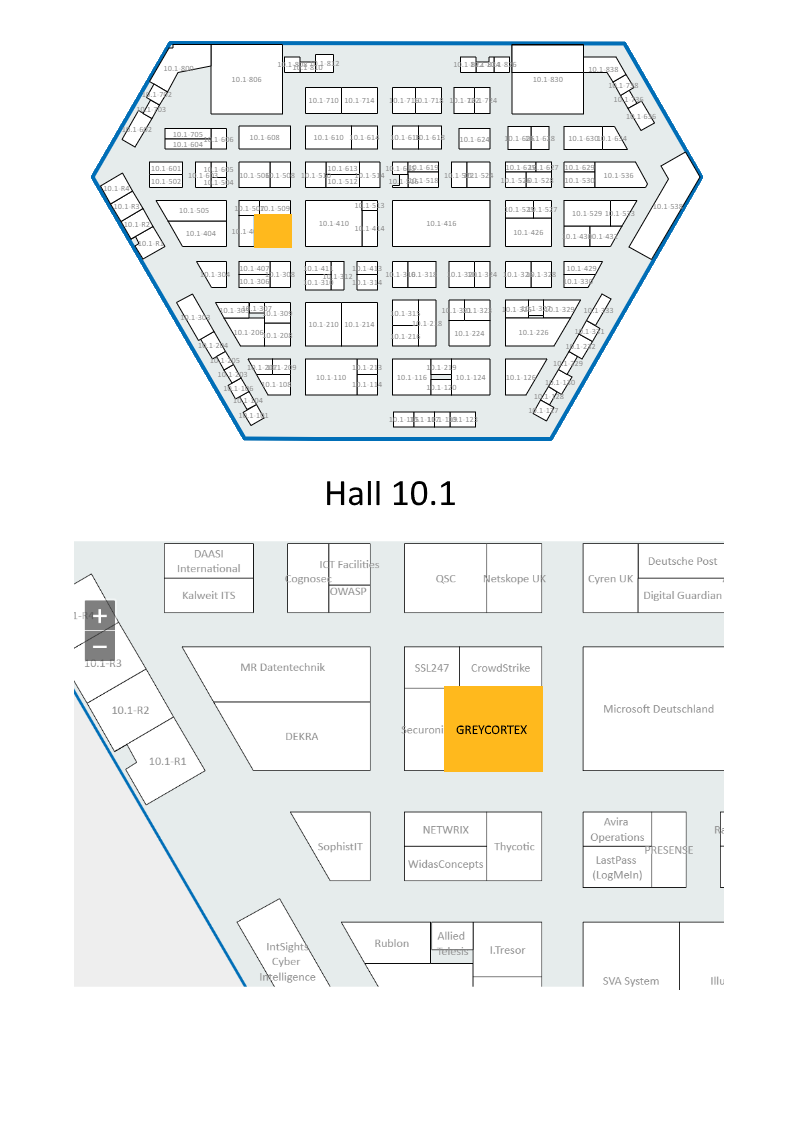
If you’re going, make sure to stop by our booth in Hall 10.1 / 10.1-408, and ask Michal Srubar, Pavel Chmelar, and Irina Milshina how MENDEL’s advanced detection, deep visibility, and quick response features can secure your network.
You can find our profile here and floor plan here.
GREYCORTEX is happy to announce that we have been selected to be part of the 2018 EY Accelerating Entrepreneurs program. This event, which happens in Amsterdam between the 21st and 24th of April, 2018, brings together companies selected as among the most innovative and advanced, worldwide. In addition to being one of only 30 companies selected to attend, GREYCORTEX is also the first Czech company in the history of the program to be selected.
As the EY press release notes: “The 2018 class of entrepreneurs represent dynamic businesses that focus on innovative and disruptive fields like artificial intelligence (AI), augmented reality, virtual reality (VR), customer interface, analytics, robotics and the Internet of Things (IoT).”
According to Annette Kimmitt, EY Global Growth Markets Leader, “… This year’s class is already solving big challenges, disrupting their markets and have cutting-edge technologies. We want to prepare these transformative entrepreneurs to expand from their local markets to a position of navigating and leading the world by pursuing their global growth objectives.”
We’re looking forward to joining the other 29 companies and accessing the wealth of information available from EY.
March brings the most recent version of GREYCORTEX MENDEL; Version 3.0. As part of this release, MENDEL 3.0 brings several new features SOC administrators will love, as well as continued expansion for SCADA networks and upgraded hardware support.
Specifically, MENDEL now supports the latest in DELL Rx40 hardware. Those in SCADA network environments will enjoy updates to the MENDEL IDS system. Version 3.0 also includes visibility for the NFS (Network File System) and IEC 60870 5 101/104 protocols. SOC users will note that dashboards have been adjusted to better accommodate multiple sensors, and that the overall capacity for sensors connected to one collector has been increased to 30. Finally, MENDEL’s capabilities have been expanded to include the ability to add your own blacklist file, as well as export files to IBM Qradar SIEM via the LEEF format.
New Features
Improvements
Several MENDEL features were improved. These included easier license extension, host identification, decryption performance, status monitoring, and data export.
Bug Fixes
In general, our development team focused on improving the user experience and reporting.
Please note that updating to version 3.0 requires appliance restart and may take up to one hour.
Contact your local GREYCORTEX partner to find out how you can put MENDEL v3.0 to work for you.
GREYCORTEX is happy to announce that we have successfully entered the Japanese market with our first office outside of Europe, and first Japanese partner and customers.
The new GREYCORTEX office, located in Kobe, Japan, will focus on sales and service across the APAC region. It will be led by Milan Fujita, who brings nearly 20 years of experience in the software sector and the Japanese and APAC markets. The office will also coordinate the regional collaboration between GREYCORTEX and its regional ESET technology alliance partners. The office may be contacted at: Kobe Fashion Mart 10F, 6-9 Koyo-cho Naka, Higashinada-ku Kobe, Hyogo, Japan 658-0032.
GREYCORTEX is also happy to announce our first partner in Japan: iSEC. Information Security Inc. Based in Kobe City, iSEC is led by CEO Yoshihisa Suzuki. iSEC offers the MENDEL Network Traffic Analysis throughout the country. The relationship is already bearing fruit, with two customers implementing GREYCORTEX MENDEL; Hyogo Prefectural Government (https://web.pref.hyogo.lg.jp/fl/index.html) and University of Hyogo (http://www.u-hyogo.ac.jp/english/index.html)
We look forward to many years of success from these relationships.
GREYCORTEX is happy to announce that we, represented by Petr Chmelar, Chief Research Officer, successfully participated as a member of the Situational Awareness (Yellow) Team in the recent “Crossed Swords 2018” cyber defense training exercise, held in Latvia and organized by the NATO Cooperative Cyber Defense Centre of Excellence (CCDCOE) in cooperation with CERT.LV.
The sister event to the larger NATO CCDCOE “Locked Shields” cyber defense exercise (the largest and most complex live-fire cyber defense exercise in the world), “Crossed Swords” is focused on practicing skills required to carry out responsive tactical cyber operations. “The exercise aims to practice skills required to fill the role of the Red Team at cyber defence exercises and to offer the most cutting-edge and challenging training experience for national cyber defenders. It is evident that in order to defend ourselves better in cyberspace, we need to know how attacks are carried out,” explained Aare Reintam, Project Manager of Technical Exercises at the NATO CCDCOE. The “Crossed Swords 2018” event included a group of more than 80 cybersecurity professionals from 15 countries.
In this year’s exercise, the Red Team was tasked with conducting a full spectrum cyber operation in a fictional scenario, while the Blue Team actively defended their assets. The Yellow Team monitored Red Team activity from different sources of information, such as network tap and host-based log files, and provided a highly valuable near real-time feedback. As part of the exercise, GREYCORTEX contributed features to “Frankenstack,” a novel stack of tools built by NATO CCDCOE, Tallinn University of Technology, CERT.LV, and industry partners.
GREYCORTEX’s experience didn’t end with the end of the training exercise. Inspired by “Crossed Swords,” GREYCORTEX renamed its Malware Lab research team to the “Red Team,” but as Petr Chmelar noted, “We will always be Yellow Team-focused.”
GREYCORTEX became a new member of the non-profit Association, EUCYBSEC (European Cyber Security Excellence Center). Interests of the Association are cybersecurity and protection of SCADA systems. EUCYBSEC is aiming to create a communication space, where commercial, state and academic specialists can freely interact and share their knowledge. Thanks to EUCYBSEC membership, GREYCORTEX gets an opportunity to participate in professional events organized by the Association.
About Version 2 Limited
Version 2 Limited is one of the most dynamic IT companies in Asia. The company develops and distributes IT products for Internet and IP-based networks, including communication systems, Internet software, security, network, and media products. Through an extensive network of channels, point of sales, resellers, and partnership companies, Version 2 Limited offers quality products and services which are highly acclaimed in the market. Its customers cover a wide spectrum which include Global 1000 enterprises, regional listed companies, public utilities, Government, a vast number of successful SMEs, and consumers in various Asian cities.
About GREYCORTEX
Founded in 2016 in Brno, Czech Republic, GREYCORTEX helps organizations make their IT and OT operations secure and reliable with uses advanced artificial intelligence, machine learning, and data mining methods which detect advanced threats to security and risks to reliability that other solutions miss.
GREYCORTEX launched a new 2.3 version MENDEL Analyst. It added standardized support of NetFlow and IPFIX, new ways of data presentation and several performance improvements and more.
New features
Improvements
GREYCORTEX MENDEL is a solution for detection, monitoring and analysis of advanced security incidents in network traffic. This solution is based on a combination of various types of detection technologies:
During the initial design, the focus was on custom Advanced Security Network Metric (ASNM), large scale data mining based on artificial intelligence, and unique specialized algorithms providing detection of the entire scale of threats and anomalies. Immediate outcomes can be obtained via an intuitive user interface and user-defined reports. GREYCORTEX also brings a whole lot of other interesting options, e.g. for forensic purposes, it provides a complex and detailed overview and history of network traffic, behavior of users, network hosts, applications and services.
The main input is a network data from a mirror port on a backbone switch or a network tap. The NBA detectors are able to accept summarized data in the format of custom ASNM metrics or according to NetFlow v5/9 and IPFIX for IPv4 and IPv6. In addition to the network traffic, the product is able to identify identity context using the company’s LDAP or the Active Directory services. These technologies can also be used for user management and authentication.
Detection signatures dataset containing over 30,000 rules is obtained from external sources. IP address blacklists and their reputation (trustworthiness) are also obtained. These lists are regularly updated on an hourly or on a daily basis. This enables the tool to obtain information about generally known malware and about Command and Control (C&C) attack servers, sources of attack, and known botnets. Moreover, uses a list of known sources of spam, information about Tor[1] networks and about proxy servers as well as information about ownership and geographic position of the communicating hosts and domains.
The ASNM protocol is used to track over 70 attributes of each individual flow in the network. For each flow, it generates information about the source and the target, its duration, size of the data portion and packet counters. MENDEL also retrieves information about frequency spectrum and performance such as Application Response Time (ART), Round Trip Time (RTT), Jitter, and other.
The functions enabling the detection of anomalous and potentially undesirable behavior work similarly in NetFlow protocol; however, thanks to ANSM, they are more detailed and therefore more effective. Another difference consists in the ability to identify consistent bidirectional flows in the network. For application detection, a custom application protocol recognition mechanism similar to NBAR (Network-Based Application Recognition) standard used in Cisco devices is employed; the mechanism can recognize hundreds of protocols. The DPI technology enables extraction of metadata for almost 30 application protocols, even in tunneled traffic.
The incident detection is based on two methods, first based on signatures (IDS) and anomaly detection (NBA) based on machine learning and artificial intelligence. The whole mechanism of learning consists in detailed modelling of the whole network on various levels. From models of the entire network to models of individual services of individual hosts and devices.
The application is continuously learning to distinguish characteristics of anomalous flows from the normal ones based on probability and statistical models without the need for decoding or decrypting the data. After installation into a network, it is necessary to let the application train itself in a new environment for at least a couple of hours. It gains the complete knowledge after approximately one week.
The following algorithms of machine learning are based on the ASNM protocol:
Probability based (Bayesian) modelling provides almost 1,000 parameters divided for each flow of a host in a network or subnetwork and its services provided locally or remotely. A separate model is created for each service of the host, network device, services aggregated on the network, subnetwork mask, state and ASN (Autonomous System Number).
GREYCORTEX MENDEL enables the user to export the created events in various formats and send them via e-mail or to remote SIEM (Security Information and Event Management) servers for archiving or further processing. This makes it possible to generate alerts based on defined conditions and notifications about the detected anomalies. In this way, it is possible to create user configured reports containing text or graphic visualization of the detected events, network performance or applications and other data in the system. The messages can include a variety of adjustable elements including tables and graphs. The messages can be exported to standard document formats such as DOCX or PDF.
The e-mail system supports connection to standard e-mail servers with SMTP protocol and encrypted communication based on PGP (Pretty Good Privacy). The data exports can also be performed in preset intervals or during detection of a particularly important event. The tool also supports export to SIEM systems using Syslog, CEF format (Common Event Format) or IDEA (Intrusion Detection Extensible Alert). These messages can be previously configured and filtered according to the requirements of system integration.
It is possible to detect:
Data fusion and correlation techniques enable the detection of a wide spectrum of threats and activities. These techniques analyze the most interesting information about a particular network obtained through various detection mechanisms. It is possible to find event correlations, eliminate false positives and perform risk estimates. The system is also compatible with systems for risk categorization such as CVSS (Common Vulnerability Scoring System) or NIST Critical Infrastructure Cybersecurity Framework, etc.
The application is supplied as a hardware appliance or as an installation ISO file for a virtual hypervisor. Depending on the mode of deployment, the appliance is supplied with 2, 4 or 8 network interfaces enabling the monitoring of the required number of source lines. The solution can be installed in a probe/collector configuration that enables monitoring geographically remote networks or as a cloud.
We tested the version 2.2.0 of the product at Karel Engliš College (VŠKE). For testing purposes, we selected the virtual deployment on the base of a fully functional 30-day demo. To ensure that the application runs correctly, it is necessary that the server includes a processor with at least 8 virtual cores, 32 GB of RAM, disk capacity of 500 GB and two network interfaces; VM-ESXi virtualization system was used. The installation went smoothly, without any issues.
Tabs for the individual configuration areas are placed well, they enable a quick transition to settings of monitored networks and policies (Policies tab), Detection mechanisms (Detection tab), notifications and exports (Exports tab), and authenticating mechanisms, users and their rights (Users tab). In the Network tab, there is a practical priority setting.
At first glance, working with GREYCORTEX is very pleasant, mainly thanks to the elaborate filtering options and user-configurable overview dashboards. The possibility of a quick display of the communication of each device and all its services was interesting for me. In particular, it is the security visibility and transparency network that the applications brings. The overview of incidents detected at the level of detection patterns is ideally complemented by incidents identified by NBA methods.
In the Detection tab, it is possible to display the defined blacklists and false alarms, set the NBA detection mechanisms and policies for IDS rules, create the necessary correlation rules, also capture and save network traffic on the basis of a defined filter into PCAP format files.
The Export tab allows to define exports; we at VŠKE use SIEM; therefore, the possibility of exporting the data into this system was interesting for us. However, we encountered an issue particularly relevant for schools; instead of one application we now need two: SIEM and GREYCORTEX.
What particularly excites me about this product is the possibility to analyze incidents (we have quite a few of them in the student subnetwork) both from the point of view of their progress in time and in the smallest details. I also appreciate the elaborate elimination of false alarms. The documentation fulfills the basic criteria, but I believe it would be convenient to add some examples of typical settings. The product is still being developed and I am curious about what next the producer will come up with.
Doc. Ing. Jaroslav Dočkal, CSc.
Graduate of VDU Martin and VAAZ, currently the vice-dean of science and creative development at Karel Engliš College. He gives lectures at Masaryk University and University of Defence. He’ is also a lecturer at Cisco Academy, a tutor of HP and a member of DSM magazine editorial board.