Skip to content

Storware Backup and Recovery 7.0 Released

We’re excited to unveil Storware Backup and Recovery 7.0, loaded with cutting-edge features and improvements tailored to address the growing demands of today’s enterprises. Let’s get started!

Storware 7.0 – what’s new?

→ Let’s start with expanded platform support, including Debian and Ubuntu. This addition expands user options by providing greater backup and recovery flexibility. Furthermore, the integration with Canonical OpenStack and Canonical KVM ensures seamless operations within this cloud infrastructure, catering to the growing demand for robust cloud solutions.

→ Support for backup sources has also been expanded to include VergeOS, providing the ultimate protection for the ultra-converged infrastructure of this VMware alternative.

→ What’s more, now you can backup Proxmox environments with CEPH storage, similar to functionality offered in OpenStack.

→ Virtualization support sees a significant boost with the inclusion of generic volume groups for OpenStack and Virtuozzo. This improvement enables users to perform consistent backups for multi-disk VMs.

→ In the upcoming release, we have also added support for a new backup location: Impossible Cloud Storage.

→ Deployment has never been easier, thanks to the introduction of an ISO-based installation. Users can now deploy their backup and recovery solutions with unprecedented simplicity, ensuring quick and hassle-free operations.

→ User experience takes a leap forward with the redesigned configuration wizard. Users can now navigate through configuration with ease, reducing the time and effort required to get the system up and running.

→ In addition to these key features, Storware Backup and Recovery 7.0 also includes a server framework update from Payara Micro to Quarkus, enhancing performance, scalability and advanced security. The system now automatically detects if the proper network storage is mounted in the backup destination path, adding an extra layer of convenience and security.

→ Additionally, the OS Agent now detects the type of operating system (Desktop/Server) for Windows and Linux, and includes an option to re-register the agent for better management.

→ As Storware evolves, certain features will be deprecated, including the “Keep last backup” flag, support for CentOS 7, SSH Transfer backup strategy for RHV, support for Xen and Oracle Virtualization Manager, and the old CLI version from the node

Storware 7.0 high level architecture:

Backup → Recover → Thrive

Storware Backup and Recovery ability to manage and protect vast amounts of data provides uninterrupted development and security against ransomware and other threats, leverages data resilience, and offers stability to businesses in today’s data-driven landscape.

About Storware
Storware is a backup software producer with over 10 years of experience in the backup world. Storware Backup and Recovery is an enterprise-grade, agent-less solution that caters to various data environments. It supports virtual machines, containers, storage providers, Microsoft 365, and applications running on-premises or in the cloud. Thanks to its small footprint, seamless integration into your existing IT infrastructure, storage, or enterprise backup providers is effortless.

About Version 2 Digital

Version 2 Digital is one of the most dynamic IT companies in Asia. The company distributes a wide range of IT products across various areas including cyber security, cloud, data protection, end points, infrastructures, system monitoring, storage, networking, business productivity and communication products.

Through an extensive network of channels, point of sales, resellers, and partnership companies, Version 2 offers quality products and services which are highly acclaimed in the market. Its customers cover a wide spectrum which include Global 1000 enterprises, regional listed companies, different vertical industries, public utilities, Government, a vast number of successful SMEs, and consumers in various Asian cities.

10 Essential Cybersecurity Best Practices for 2024

Cybercrime is one of the fastest-growing threats worldwide, impacting businesses across all industries. Cybersecurity Ventures estimates that by 2024, cybercrime will cause $9.5 trillion in damages globally. If cybercrime were a country, it would rank as the third-largest economy, after the U.S. and China[1].

Staying informed about the latest cybersecurity tips and best practices is essential to avoid becoming the next headline due to a security breach. Protecting your business from cyberattacks is no small feat, given that cybercriminals are always evolving their attack strategies.

cybersecurity-best-practices
Cybersecurity Best Practices
Let’s discover the ten essential cybersecurity best practices to help you stay current and build a strong defense against potential threats.

Understanding Cybersecurity
Cybersecurity involves protecting computer systems, networks, and sensitive data from cyberattacks that aim to steal, alter, or destroy critical information. Whether it’s financial records, medical data, or trade secrets, businesses and organizations must build resilient defenses to counter the increasing threat of cybercrime.

Hackers often exploit vulnerabilities in software or hardware, leading to data breaches and fraud. As the number of connected devices grows, so does the need for more advanced cybersecurity measures.

Both private and public sectors face similar challenges in safeguarding critical data. With various endpoints being a part of daily work operations, more enhanced endpoint security is imperative for protecting valuable information and maintaining system integrity. Effective measures must be implemented to ensure that all endpoints are secured against potential vulnerabilities, creating a protected digital ecosystem.

Essential Cybersecurity Best Practices for Businesses in 2024
To strengthen your organization’s security posture, we’ve curated the following ten essential cybersecurity tips tailored for security professionals:

1. Establish a Robust Cybersecurity Policy
A robust cybersecurity policy ensures that all security measures within your organization are clearly defined and consistently followed. It should outline the key controls, software updates, data backup protocols, and password policies while addressing department-specific needs.

A well-structured policy must also define who maintains it, who responds to incidents, and who has admin rights, ensuring effective cybersecurity management.

2. Control Access to Sensitive Data
Controlling access to sensitive data involves limiting employee privileges to only what is necessary for their tasks. By applying the principle of least privilege and the zero trust model, your organization reduces the risk of insider threats.

Implementing just-in-time access enhances security by granting temporary access only when needed. This minimizes employee’s exposure to sensitive information. You can further enforce role-based access control, ensuring that users get permission-based access to their job role in the organization.

3. Vulnerability Management
Vulnerability management is an essential cybersecurity practice focused on the cyclical practice of identifying, classifying, prioritizing, remediating, and mitigating software vulnerabilities. It protects sensitive data and ensures compliance with industry standards. By regularly identifying vulnerabilities and prioritizing remediation efforts, organizations take informed actions to reduce the risk of cyberattacks.

With vulnerability management as a core component of the cybersecurity framework, organizations can stay ahead of emerging threats, reduce their risk exposure, and strengthen their overall security posture.

4. Maintaining a Secured Software and Hardware Environment
Organizations must maintain an optimized and secure environment for the software and hardware supporting their devices. Regular updates to both are essential: software updates bring new features, fix bugs, and strengthen security, while hardware updates enable quick responses to cybersecurity threats.

Similarly, to maintain endpoint and data security, organizations need control over device connections. Establishing input and output (I/O) device access control helps protect sensitive data by blocking unauthorized peripherals and ensuring compliance with security policies.

5. Enhance Data Protection and Management
An organization’s data protection and security is dependent on how it manages its business data and endpoints. You must build your data protection measures around the key principles of information security:

Confidentiality — protect information from unauthorized access
Integrity — make sure unauthorized users can’t modify data at any stage of the data lifecycle
Availability — ensure authorized users always have access to the data they need
Consider establishing a secure VPN connection to prevent network breaches. A VPN creates a secure link that protects sensitive information from interception and enhances privacy by masking your IP address, ensuring confidentiality and reducing the risk of targeted attacks. With endpoint security solutions like Veltar, you can effectively route traffic for your on-premise assets through a secure VPN tunnel. This controlled VPN network encrypts data and enables anonymous data transmission over public networks.

You must also consider adopting a strong mobile device management solution for data protection. MDM solutions provide various data security features such as data encryption, containerization, remote lock, and wipe. This ensures that your data is protected from unauthorized access.

6. Adopt Zero-Trust Security Principles
“Zero Trust” refers to the practice of always authenticating and authorizing users based on all available data, such as user identification, location, device health, service or workload, data classification, and anomalies. Zero-trust principles—never trust, always verify, assume breach, and apply least-privileged access—ensure robust security by continuously validating users before granting access to company resources.

Implementing Single Sign-On (SSO) within a Zero Trust framework enhances secure access management by providing users with a personalized single-login experience, which reduces password fatigue and streamlines the authentication process.

Another major component of Zero Trust Security is MFA, which adds an extra layer of protection through various authentication methods, such as passwords, PINs, biometric scans, and hardware tokens. This layered approach is critical in work environments where sensitive data and critical systems are vulnerable to sophisticated attacks, as it acts as a deterrent against unauthorized access.

By leveraging least-privilege principles alongside SSO and MFA, organizations can limit permissions, regularly audit access, and reduce unnecessary standing privileges to critical data and systems. This comprehensive strategy minimizes the risk of unauthorized access and potential breaches, enhancing overall cybersecurity.

7. Conduct Regular Cybersecurity Audits
Conducting regular cybersecurity audits helps identify vulnerabilities, compliance gaps, and suspicious activities by employees, privileged users, or third-party vendors—a thorough audit, utilizing data from logs, session records, and metadata.

Cybersecurity audits enhance security by detecting breaches and improving accountability. This proactive approach allows you to adjust and strengthen your organization’s cybersecurity posture effectively.

8. Prepare an Incident Response Plan
A well-prepared Incident Response Plan enables organizations to respond quickly to cybersecurity threats, minimizing damage and operational disruption. It establishes clear roles and responsibilities for IT teams, incident responders, and management, ensuring a coordinated and efficient response.

By having a structured approach, organizations can effectively contain attacks, identify sources, and remediate issues, reducing the potential for data loss and financial impact. A good plan also helps maintain regulatory compliance, avoiding penalties for non-reporting.

Regular testing and updating of the plan are essential to ensure its effectiveness. The continuous improvement process allows organizations to identify gaps and refine their incident response strategy. This strengthens their overall cybersecurity defenses.

9. Adopt an Efficient Content Management Solution
With the rise of sophisticated phishing attacks, malicious actors can steal sensitive information, leading to data breaches. To mitigate these risks, organizations should implement robust content management solutions that enable secure file sharing and regular data backups.

Regularly backing up data to secure locations becomes an essential cybersecurity practice safeguarding against ransomware attacks and data loss. By setting up automated backups and testing the recovery process, organizations can quickly restore important information when needed, ensuring smooth operations even in the face of unexpected threats.

10. Train Employees to Identify and Prevent Cyber Attacks
Training employees to spot and prevent cyberattacks is a vital component of any cybersecurity strategy. Regular sessions, such as those offered in a cybersecurity bootcamp, should equip staff with the skills to identify phishing attempts, social engineering attacks, and suspicious behavior.

Employees must understand the importance of protecting sensitive data, recognizing potential breaches, and promptly reporting any threats. Consistent training helps build a security-conscious workforce, minimizing the chances of human errors compromising your organization’s defenses.

Implementing these best practices helps organizations protect their endpoints, and secure sensitive data. Yet, these measures alone cannot completely address the modern complex endpoint security challenges. To further strengthen your cybersecurity approach, you must consider a solution that offers endpoint security and management across your organization.

Cybersecurity: The Way Forward with Veltar
Endpoint security forms a critical element for any effective cybersecurity strategy. As organizations adopt cybersecurity best practices, protecting endpoints like laptops, mobile phones, rugged devices, and IoT systems—becomes essential. It helps you ensure authorized access and mitigates potential data breaches. By securing endpoints, organizations can fortify their overall defenses, ensuring that sensitive data and critical endpoints are better protected against malicious threats.

Redefine how you protect, manage, and secure endpoints across your organization with Veltar, a comprehensive endpoint security solution. Veltar provides unified endpoint protection, enabling your organization to operate confidently in a threat-sensitive environment. Safeguard your critical assets while promoting innovation and agility, allowing you to focus on what truly matters—driving growth and success.

Consult our product experts to learn how Veltar lets you transform endpoint security strategy.

About Scalefusion
Scalefusion’s company DNA is built on the foundation of providing world-class customer service and making endpoint management simple and effortless for businesses globally. We prioritize the needs and feedback of our customers, making sure that they are at the forefront of all decision-making processes. We are dedicated to providing comprehensive customer support services, and place emphasis on customer-centric thinking throughout the organization.

About Version 2 Digital

Version 2 Digital is one of the most dynamic IT companies in Asia. The company distributes a wide range of IT products across various areas including cyber security, cloud, data protection, end points, infrastructures, system monitoring, storage, networking, business productivity and communication products.

Through an extensive network of channels, point of sales, resellers, and partnership companies, Version 2 offers quality products and services which are highly acclaimed in the market. Its customers cover a wide spectrum which include Global 1000 enterprises, regional listed companies, different vertical industries, public utilities, Government, a vast number of successful SMEs, and consumers in various Asian cities.

Scalefusion Declares Day Zero Support for Android 15: Fresh Enrollment Ready!

At Scalefusion, our decade-long expertise in Android MDM empowers us to confidently deliver Day Zero support for Android 15 fresh enrollments. For over 10 years, we’ve been committed to equipping IT administrators with seamless, efficient device management solutions. With the release of Android 15, we’re continuing our legacy of ensuring that organizations are ready to manage their Android devices from day one. 

Android 15
Android 15 for Enterprise

Our focus remains on providing prompt, comprehensive support that meets your evolving needs, while you focus on what matters most- your business.

What’s New in Android 15?

Android 15, introduces a range of features designed to enhance security and user experience. Here’s a quick overview of some of the standout features:

  • Enhanced Privacy Controls: Users now have more granular control over app permissions and data access, putting privacy in the spotlight.
  • Improved Performance: Android 15 brings optimizations for better battery life and faster app responsiveness.
  • Refreshed UI: A sleeker design with new themes, animations, and accessibility features.
  • AI-Powered Enhancements: From smarter predictive text to improved recommendations, AI integration is more powerful than ever.
  • Better Multitasking: Improved split-screen and pop-up views make multitasking a breeze.
  • New Widgets: Fresh and customizable widgets that elevate home screen personalization.
  • Security Enhancements: Advanced security measures, including more robust encryption, to protect user data.
  • Upgraded Messaging: Updates to messaging apps include scheduled messages and enhanced group chats.

Android 15 for Enterprise

Android 15 comes with specific improvements for enterprise users, making it easier for IT teams to manage devices and protect corporate data:

  • Advanced Security Features: Thanks to improved encryption, advanced threat protection, and robust compliance features, organizations can manage sensitive data more securely. These enhancements help safeguard corporate information against unauthorized access and data breaches.
  • Enhanced Device Management: With more flexible tools available for IT admins, device configuration and management across the organization become more efficient. The improved integration with Enterprise Mobility Management (EMM) solutions streamlines administrative tasks and policy enforcement.
  • Work Profile Enhancements: A more robust separation between personal and work data facilitates better security and privacy. This feature ensures that corporate data remains protected while allowing employees to enjoy their personal device experience without compromising sensitive information.
  • Zero Trust Integration: Built-in support for Zero Trust security models guarantees that every access request is verified. This enhancement strengthens security protocols by ensuring that only authenticated users and devices gain access to corporate resources.
  • Streamlined App Management: Easier access to enterprise apps, along with improved mechanisms for app updates, minimizes downtime for employees. This ensures that teams are always equipped with the latest tools and applications, enhancing overall productivity.

Get started with Android 15 and manage with Scalefusion

With Scalefusion and Android 15, unlock powerful new features and enhancements for enterprise device management, seamlessly. From stronger security protocols, including advanced encryption and zero trust compatibility, to improved work profiles that ensure better separation of personal and corporate data, Scalefusion provides robust tools to control and configure devices effortlessly. With enhanced APIs for efficient app management, faster deployments, and a smoother user experience with refreshed UI and multitasking capabilities, Scalefusion ensures your organization’s Android 15 rollout is secure, efficient, and future-ready.

As Android 15 becomes the standard for devices worldwide, Scalefusion is committed to staying ahead, offering Day Zero support for fresh enrollments on this exciting new platform. We are eager to hear your feedback and are ready to assist with any questions or concerns as you transition to devices running on Android 15. Stay tuned for further updates as we optimize Scalefusion’s compatibility with the latest Android features.

About Scalefusion
Scalefusion’s company DNA is built on the foundation of providing world-class customer service and making endpoint management simple and effortless for businesses globally. We prioritize the needs and feedback of our customers, making sure that they are at the forefront of all decision-making processes. We are dedicated to providing comprehensive customer support services, and place emphasis on customer-centric thinking throughout the organization.

About Version 2 Digital

Version 2 Digital is one of the most dynamic IT companies in Asia. The company distributes a wide range of IT products across various areas including cyber security, cloud, data protection, end points, infrastructures, system monitoring, storage, networking, business productivity and communication products.

Through an extensive network of channels, point of sales, resellers, and partnership companies, Version 2 offers quality products and services which are highly acclaimed in the market. Its customers cover a wide spectrum which include Global 1000 enterprises, regional listed companies, different vertical industries, public utilities, Government, a vast number of successful SMEs, and consumers in various Asian cities.

EasyVista Partners with Xeridia for Empowering IT Maturity Through ITSM

October 22, 2024

EasyVista Partners with Xeridia for Empowering IT Maturity Through ITSM
Share our post


EasyVista, a global SaaS provider for comprehensive IT service management (ITSM), IT monitoring (ITOM), Enterprise Service Management and Remote Support, announces its partnership with Xeridia, a custom software development and technology consulting company. This partnership will provide businesses with enhanced ITSM solutions, combining the strength of EasyVista’s advanced platform with Xeridia’s expertise in delivering complex, high-value IT projects.

As an EasyVista Gold Partner, Xeridia will offer complete support throughout the entire implementation process, from licensing to creating customized integrations. Together, the companies will provide tailored IT solutions that improve IT maturity and efficiency, ensuring that enterprises can meet their technology goals with maximum effectiveness.

“We are thrilled to partner with Xeridia and bring their exceptional expertise in ITSM and agile development to our customers,” said Ismael Sabbagh, Country Manager, Spain, at EasyVista. “This partnership underscores our commitment to empowering businesses to optimize their IT operations, innovate faster, and deliver better business outcomes.”

Xeridia’s proven track record in industries like finance, insurance, and telecommunications makes them the ideal partner to help EasyVista continue delivering proactive, predictive IT service solutions. With more than 18 years of experience in implementing ITSM platforms, Xeridia ensures that each customer receives the most adaptable and robust solutions for their unique business needs.

“At Xeridia we focus on creating the most appropriate ecosystem for each customer. By partnering with EasyVista, we know that we are offering one of the most robust and versatile ITSM solutions on the market, strengthening our ability to add value and adapt to the needs of each organization,” says Roberto Vidal, CEO of Xeridia.

About EasyVista  
EasyVista is a leading IT software provider delivering comprehensive IT solutions, including service management, remote support, IT monitoring, and self-healing technologies. We empower companies to embrace a customer-focused, proactive, and predictive approach to IT service, support, and operations. EasyVista is dedicated to understanding and exceeding customer expectations, ensuring seamless and superior IT experiences. Today, EasyVista supports over 3,000 companies worldwide in accelerating digital transformation, enhancing employee productivity, reducing operating costs, and boosting satisfaction for both employees and customers across various industries, including financial services, healthcare, education, and manufacturing.

About Version 2 Digital
Version 2 Digital is one of the most dynamic IT companies in Asia. The company distributes a wide range of IT products across various areas including cyber security, cloud, data protection, end points, infrastructures, system monitoring, storage, networking, business productivity and communication products.

Through an extensive network of channels, point of sales, resellers, and partnership companies, Version 2 offers quality products and services which are highly acclaimed in the market. Its customers cover a wide spectrum which include Global 1000 enterprises, regional listed companies, different vertical industries, public utilities, Government, a vast number of successful SMEs, and consumers in various Asian cities.

Elevating IT Infrastructure: The Integration of MDM

Have you ever purchased a security system or saw one? If not, let’s paint a picture. Just imagine that you have purchased a state-of-the-art home security system. It has all the bells and whistles, cameras, motion sensors, smart locks, and whatnot. But now you face the challenge of integrating it with your existing household setup. You need it to work smoothly with your current security protocols, connect effortlessly to your home network, and make sure it doesn’t disrupt your daily routine.

Do you get the idea? Similarly, in the mobile-driven corporate world, simply acquiring a Mobile Device Management (MDM) solution is insufficient. The challenge lies in seamlessly integrating it into your existing IT infrastructure to maintain operational integrity and security.

Integration of MDM
Integrate MDM Solutions Into Your Existing IT Infrastructure
This blog discusses the strategic considerations for seamlessly integrating MDM solutions, which promise streamlined management and better security without causing disruptions.

Challenges of Managing IT Infrastructure Without MDM
When did you last try to juggle multiple responsibilities without a proper system? It could be organizing a family vacation, where you had to book flights, hotels, and activities while managing work deadlines and household chores. The stress and inefficiency can be overwhelming, right?

The same applies to businesses managing hundreds or thousands of mobile devices without a centralized solution.

1. Security and Compliance Risks
Security is a top priority for any industry. Without a centralized MDM solution, ensuring all devices are consistently updated with the latest security patches is like trying to herd cats. Each device has its schedule, and users often delay updates, either out of convenience or simply because of forgetfulness. This lack of uniformity leaves significant gaps in your security.

Inconsistent security updates can lead to major headaches. What if a new malware strain is spreading rapidly? IT teams must manually scramble to update each device without an MDM solution—a slow and error-prone process. In the meantime, the organization remains exposed to potential breaches, risking sensitive data and regulatory non-compliance. It’s like locking some doors in your house while leaving others wide open, hoping intruders won’t find the unlocked ones.

2. Operational Inefficiencies
Operational inefficiencies are another major issue. Manual device management has substantial operational overhead and resource consumption. IT staff spend countless hours on mundane tasks like setting up devices, pushing updates, and troubleshooting issues, which could be better spent on strategic initiatives. This wastes valuable resources and stifles innovation and growth.

3. User Experience and Support
A diverse device environment can be a support nightmare. Different devices and operating systems require specialized knowledge and tools, making it challenging to provide consistent support. Consistent access to corporate resources can be critical without a unified management solution. Some users might have access to their emails and files, while others struggle with intermittent connectivity and permission issues. This inconsistency hampers productivity and can lead to dissatisfaction among employees, as they feel unsupported and hindered in their work.

Strategic Considerations for Integrating MDM into IT Infrastructure
Careful planning and strategic considerations are essential when integrating an MDM solution into your IT infrastructure to ensure a smooth and effective deployment. Here, we look into some key aspects, such as compatibility and deployment models, providing insights to help you navigate the integration process.

1. Compatibility
Before implementing an MDM solution, verifying its compatibility with your current IT infrastructure is important. This includes assessing compatibility with servers, network configurations, and security protocols. This compatibility check helps:

Avoid Potential Conflicts: Ensuring the MDM solution works seamlessly with existing components and prevents disruptions during and after integration.
Facilitate Smooth Integration: Compatibility ensures the MDM software can be deployed efficiently, reducing the risk of integration issues that could lead to downtime or compromised security.
Maintain Security Standards: Verifying compatibility ensures the MDM solution aligns with your existing security measures, maintaining the integrity of your overall security posture.
2. Deployment Models
Selecting the appropriate deployment model for your MDM solution is vital. The choice will depend on your industry’s specific needs, resources, and strategic goals. Here are the three primary deployment models:

a) Cloud-based
Benefits

Quick Deployment: Cloud-based MDM solutions can be deployed rapidly, allowing for faster implementation.
Scalability: Cloud solutions offer the flexibility to scale up or down based on business needs, accommodating growth or changes in device management requirements.
Reduces Upfront Costs: Cloud models typically involve lower initial investments, as there is no need for extensive hardware purchases or infrastructure upgrades.
Challenges

Data Privacy Concerns: Storing data in the cloud raises potential privacy issues, especially for businesses dealing with sensitive information.
Dependency on Internet Connectivity: Cloud solutions rely on stable Internet connections, and any disruption in server connectivity can affect access and functionality.
Best Practices

Conduct Thorough Risk Assessments: Evaluate potential risks associated with data storage and access to the cloud.
Ensure Compliance with Data Protection Regulations: Verify that the cloud provider complies with relevant data protection laws and standards.
Establish Clear SLAs with the Cloud Provider: Define service level agreements that outline performance expectations, support, and security measures.
b) On-Premise
Security Considerations

Greater Control Over Data: On-premise solutions provide direct control over data storage and security measures, which is critical for businesses with stringent data protection requirements.
Customizable Security Measures: Businesses can customize security protocols and configurations to meet their specific needs.
Resource Requirements

Significant Investment: Implementing an on-premise solution requires substantial hardware, software, and ongoing maintenance investment.
Dedicated Resources: Ensure sufficient resources are allocated to manage and support the on-premise MDM infrastructure.
Best Practices

Regularly Update and Patch the MDM Software: Keep the MDM software updated to protect against vulnerabilities and ensure optimal performance.
Maintain Backup and Disaster Recovery Plans: Implement comprehensive backup and recovery strategies to safeguard data and ensure business continuity.
Allocate Dedicated Resources for Management and Support: Ensure skilled personnel can manage and support the MDM infrastructure.
c) Virtual Private Cloud (VPC)
Flexibility and Control
Combines Cloud and On-Premise Benefits: VPCs offer the scalability and flexibility of cloud solutions while providing control similar to on-premise deployments.
Customizable Environment: Businesses can configure the VPC to meet specific needs and security requirements.
Benefits of Integrating MDM into IT Infrastructure
Integrating MDM into your IT infrastructure offers numerous advantages that enhance security, efficiency, and user experience. Here are the key benefits:

1. Streamlined Device Enrollment and Configuration
MDM solutions simplify enrolling and configuring new devices, ensuring they meet corporate standards from the start. This reduces the time and effort required to set up devices and ensures consistency across the industry.

2. Strengthened Security
MDM provides centralized control over security policies, ensuring consistent updates and reducing vulnerabilities across all devices. Features like remote-wipe and encryption further safeguard corporate data, protecting against breaches and unauthorized access.

3. Increased Productivity
By consolidating management tasks into a single platform, MDM software reduces the complexity and overhead of device management. Automated processes streamline operations and free up IT resources, allowing them to focus on strategic initiatives that drive business growth.

4. Improved Regulatory Compliance
MDM solutions help businesses comply with industry regulations by enforcing security policies and maintaining audit trails. This ensures all devices adhere to compliance standards, reducing the risk of fines and legal issues.

5. Cost Savings
MDM solutions can lead to significant cost savings by automating device management and reducing the need for manual interventions. They also minimize the resources required for IT support and reduce downtime.

Seamlessly Integrate your Existing IT Infrastructure with Scalefusion
Scalefusion offers flexible deployment options to fit your business needs, whether you prefer cloud, on-premise, or VPC solutions. This versatility ensures you can seamlessly integrate Scalefusion’s MDM capabilities into your existing IT infrastructure without disrupting your current operations.


About Scalefusion
Scalefusion’s company DNA is built on the foundation of providing world-class customer service and making endpoint management simple and effortless for businesses globally. We prioritize the needs and feedback of our customers, making sure that they are at the forefront of all decision-making processes. We are dedicated to providing comprehensive customer support services, and place emphasis on customer-centric thinking throughout the organization.

About Version 2 Digital

Version 2 Digital is one of the most dynamic IT companies in Asia. The company distributes a wide range of IT products across various areas including cyber security, cloud, data protection, end points, infrastructures, system monitoring, storage, networking, business productivity and communication products.

Through an extensive network of channels, point of sales, resellers, and partnership companies, Version 2 offers quality products and services which are highly acclaimed in the market. Its customers cover a wide spectrum which include Global 1000 enterprises, regional listed companies, different vertical industries, public utilities, Government, a vast number of successful SMEs, and consumers in various Asian cities.

EasyVista Launches EV Pulse AI: Major Enhancements Elevating IT Service Management with Next-Level AI Capabilities

EasyVista, a global SaaS provider for comprehensive IT service management (ITSM), IT monitoring, Enterprise Service Management, and Remote Support, today announced the launch of EV Pulse AI, a transformative AI layer integrated into its flagship EasyVista Platform. These major enhancements to EasyVista’s AI capabilities, part of the Platform 2024.3 release scheduled for November 2024, represent a significant enrichment of EasyVista’s AI capabilities, offering organizations unprecedented power to simplify IT complexities, streamline operations, and accelerate digital transformation.  

Continue reading

Perforce’s Helix Core Now ISO 26262 Certified for Functional Safety in Automotive Development

Perforce matches functional safety with the software and design driven world of automotive today.

MINNEAPOLIS, OCTOBER 29, 2024 — Perforce Software, a global provider of enterprise DevOps solutions, today announced its version control platform Helix Core has achieved ISO 26262 Functional Safety Process Certification by internationally-accredited certification body TÜV SÜD. With this certification, Perforce ensures its platform meets the strict safety and reliability standards required for developing automotive systems and reinforces its commitment to supporting innovation within the automotive industry. Perforce Helix Core is the version control platform trusted by leading automotive OEMs and suppliers – as well as the world’s largest semiconductor firms, embedded systems developers, and top gaming and media studios – for limitless scalability, fine-grained security, and rapid file access from anywhere in the world. ISO 26262 is an international functional safety standard for the development of electrical and electronic systems, including hardware and software components, for road vehicles. By certifying its version control platform is ISO 26262 compliant, Perforce now makes this critical solution available to all organizations that need to prove compliance with the highest safety, quality, and reliability standards. “With the transition to software-defined vehicles and the rise of autonomy, automotive OEMs and suppliers are revolutionizing their development pipeline with modern tools that accelerate innovation, yet safety remains paramount,” said Brad Hart, CTO and VP of Product Management at Perforce. “Helix Core offers a modern alternative to legacy tools that can no longer meet the demands of today’s fast-paced software- and design-driven automotive development. For large, cross-functional, globally distributed teams, Helix Core is the only version control solution that can deliver the speed, scale, and security necessary to manage all digital assets, including binary code and large game engine/3D files.” Perforce’s 2024 State of Game Technology survey found that 50% of respondents are now using game engines outside of traditional game development, such as in the creation of digital twins of vehicles. These digital twins can enhance vehicle safety in many ways, from virtual crash tests to using simulated driving scenarios to more efficiently train Advanced Driver Assistance Systems (ADAS). With Helix Core serving as an essential foundation to effectively leverage this technology, achieving the ISO 26262 Functional Safety Process Certification allows Perforce to offer a platform that drives innovation while ensuring the highest level of automotive safety.

About Perforce
The best run DevOps teams in the world choose Perforce. Perforce products are purpose-built to develop, build and maintain high-stakes applications. Companies can finally manage complexity, achieve speed without compromise, improve security and compliance, and run their DevOps toolchains with full integrity. With a global footprint spanning more than 80 countries and including over 75% of the Fortune 100, Perforce is trusted by the world’s leading brands to deliver solutions to even the toughest challenges. Accelerate technology delivery, with no shortcuts.

About Version 2 Digital

Version 2 Digital is one of the most dynamic IT companies in Asia. The company distributes a wide range of IT products across various areas including cyber security, cloud, data protection, end points, infrastructures, system monitoring, storage, networking, business productivity and communication products.

Through an extensive network of channels, point of sales, resellers, and partnership companies, Version 2 offers quality products and services which are highly acclaimed in the market. Its customers cover a wide spectrum which include Global 1000 enterprises, regional listed companies, different vertical industries, public utilities, Government, a vast number of successful SMEs, and consumers in various Asian cities.

Enforcing 2FA to Intranet Applications and Internal Web Resources with Thinfinity’s RBAC Capabilities: A Secure SSL VPN Solution

Introduction

If you’ve been following our recent discussions, we’ve explored a variety of critical topics, from Zero Trust models to the importance of modernizing legacy systems. Today, we’re focusing on another pivotal area: secure access to internal web applications. In this article, we’ll dive into how organizations can safely access internal web applications without the need for a VPN. We’ll cover the limitations of traditional VPNs, discuss how Thinfinity’s Web Application Gateway offers a streamlined alternative, and explore the role of key technologies like outbound-only connections and Zero Trust principles. By the end, you’ll understand why Thinfinity is a game-changer for simplifying remote access without compromising security. In many traditional setups, accessing internal web applications from outside the organization required setting up a VPN (Virtual Private Network) or using an ADC (Application Delivery Controller). These tools created secure, encrypted tunnels between the user’s device and the organization’s network, enabling access to sensitive internal applications. However, VPNs often come with challenges such as slow connection speeds, complex setups, and increased attack surfaces if misconfigured. This is where Thinfinity’s Web Application Gateway (WAG) comes in, providing a modern, simplified solution for securely publishing web applications without the need for a VPN or ADC.

Why Are VPNs and ADCs Typically Used for Remote Access?

  1. Security for Remote Employees: Internal web applications, such as HR systems, CRMs, and ERP platforms, contain sensitive information that needs to be securely transmitted between the user and the internal network. VPNs create encrypted tunnels that protect this data when accessed from outside the organization. However, maintaining VPNs can be resource-intensive and introduces latency.
  2. Access to Legacy or On-Premise Applications: Many businesses use legacy or on-premise web applications that aren’t directly exposed to the public internet. These applications, ranging from custom business tools to accounting software, are typically accessible only within the internal network, necessitating the use of a VPN or ADC to grant remote users access.
  3. Multi-Site Connectivity: When businesses have multiple office locations, a site-to-site VPN is often used to link these offices into a unified network. This makes internal resources, including web applications, accessible across all locations. Similarly, ADCs help manage traffic between these locations, improving performance and load balancing across the network.

Thinfinity’s Web Application Gateway: Zero trust Access to Web Applications

Thinfinity Workspace’s Web Application Gateway offers a simpler, more secure alternative to VPNs and ADCs for publishing internal web applications. Here’s how it addresses the typical needs of secure access:
  1. Publishing Web Applications Securely: Thinfinity allows IT administrators to easily publish internal web applications, such as intranet sites, CRMs, or ERP systems, through the Web Application Gateway. This eliminates the need for users to establish a VPN connection, while ensuring the application is securely accessible over SSL/TLS encryption. The WAG ensures that only authenticated users can access the published applications, providing a higher level of security than traditional VPN’s.
  2. No Need for Inbound Ports: Traditional VPN setups often require opening inbound ports on the network firewall, which can expose the organization to external threats. Thinfinity’s WAG, on the other hand, uses outbound connections to securely forward internal applications to remote users, minimizing the network’s exposure and enhancing security.
  3. Cross-Platform Accessibility: Thinfinity’s WAG allows users to access internal web applications from any device or platform via an HTML5 browser. Whether on a desktop, tablet, or smartphone, users can securely access applications without needing to install additional software like a VPN client.
  4. Role-Based Access and Zero Trust: Just as with VPNs, Thinfinity supports role-based access controls. Administrators can define which users or groups have access to specific applications, ensuring that only authorized personnel can view sensitive data. This aligns with the principles of a Zero Trust security model, where every access request is authenticated and authorized individually.
  5. Improved Performance: Unlike VPNs, which can introduce latency due to encryption overhead and routing through the VPN server, Thinfinity’s WAG optimizes the delivery of web applications directly through the browser. This reduces the performance issues often associated with VPNs, providing a faster and more seamless experience for end-users.

The Role of Thinfinity’s Secondary Broker in Secure WAG Connections

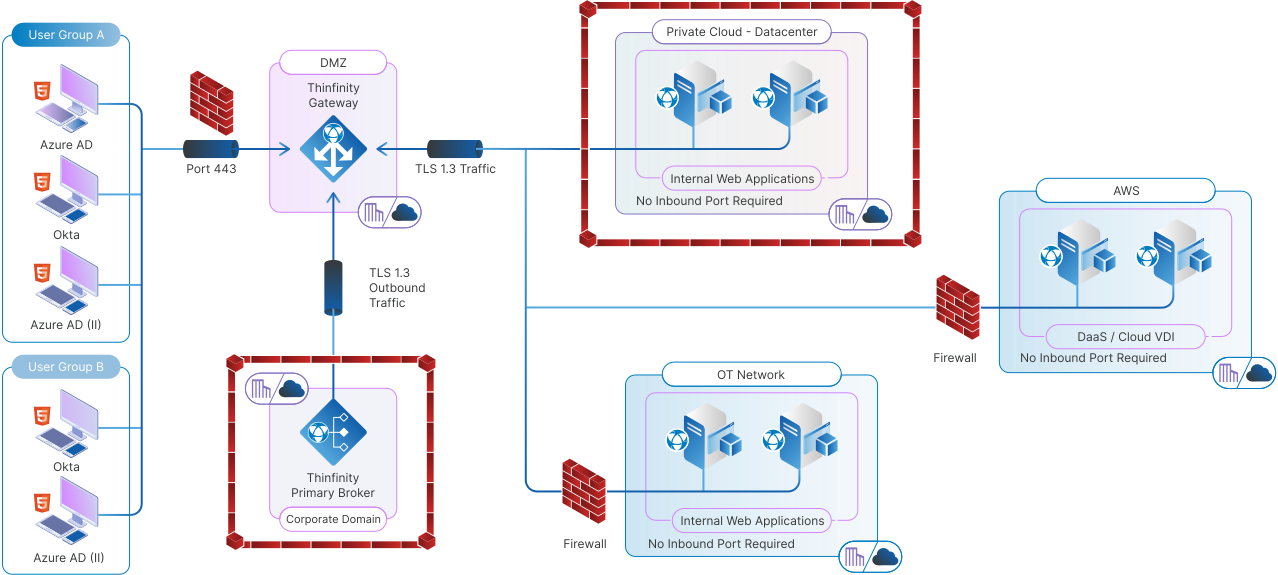
One of Thinfinity’s standout features is its Secondary Broker, which plays a pivotal role in securely connecting remote users to internal resources without the need for inbound ports. The Secondary Broker generates a secure connection between the Web Application Gateway and the target network by initiating outbound connections. Here’s how it works:

  • Outbound-Only Connections: The Secondary Broker establishes connections to the Thinfinity Gateway from within the target network. These reverse connections are initiated as outbound traffic, which is typically allowed by firewalls, removing the need to open risky inbound ports.
  • Seamless Application Access: Once the connection is established, users can access web applications securely through Thinfinity’s WAG, just as they would in a traditional VPN environment, but without the complexity and security risks of inbound connections.
  • Increased Security and Scalability: By decentralizing traffic management, the Secondary Broker supports large-scale deployments and improves performance without compromising security. This feature makes it ideal for distributed environments where different departments or locations require secure access to the same applications.
Graphic How to Securely Access Internal Web Applications Without a VPN

Use Cases for Thinfinity’s Web Application Gateway

Many types of internal web applications benefit from being published via Thinfinity’s WAG:
  • HR Systems and Portals: Remote employees can securely access sensitive HR data without needing a VPN connection, ensuring privacy while streamlining access.
  • Customer Relationship Management (CRM) Tools: CRMs often contain valuable customer data. Thinfinity’s WAG ensures secure access from anywhere while maintaining compliance with security policies.
  • Enterprise Resource Planning (ERP) Systems: Thinfinity’s WAG enables secure, remote access to ERP systems without the need for complex VPN setups.
  • Custom Web-Based Business Applications: Many companies have proprietary web applications that are crucial for daily operations but need to be accessed securely by remote users. Thinfinity’s WAG simplifies this access.

Conclusion

Thinfinity’s Web Application Gateway offers a powerful, modern solution for businesses looking to securely publish internal web applications without the hassle of VPNs or ADCs. By utilizing outbound SSL connections and role-based access, it simplifies access while maintaining the highest levels of security. Whether it’s for HR systems, CRMs, or custom web-based applications, Thinfinity provides an effective way to streamline remote access, ensuring a smooth experience for users across any device. As businesses continue to prioritize security and efficiency, Thinfinity’s approach stands out as a clear path forward—enhancing performance while reducing complexity. If you’re ready to take the next step in securing your internal web applications, setting up a Web Application Gateway is the perfect starting point. Here’s a tutorial to guide you through the process of publishing your first web application in Thinfinity.

About Cybele Software Inc.
We help organizations extend the life and value of their software. Whether they are looking to improve and empower remote work or turn their business-critical legacy apps into modern SaaS, our software enables customers to focus on what’s most important: expanding and evolving their business.

About Version 2 Digital

Version 2 Digital is one of the most dynamic IT companies in Asia. The company distributes a wide range of IT products across various areas including cyber security, cloud, data protection, end points, infrastructures, system monitoring, storage, networking, business productivity and communication products.

Through an extensive network of channels, point of sales, resellers, and partnership companies, Version 2 offers quality products and services which are highly acclaimed in the market. Its customers cover a wide spectrum which include Global 1000 enterprises, regional listed companies, different vertical industries, public utilities, Government, a vast number of successful SMEs, and consumers in various Asian cities.

2024 Data Protection Trends Report: Key Insights and Implications

As we move into Q2 2024, data protection remains a critical area of focus for organizations worldwide. The “2024 Data Protection Trends Report” by Veeam Software provides a comprehensive analysis of the current landscape and future directions in data protection.

This report is based on insights from over 1,200 unbiased IT leaders and implementers in 10 countries who are leading data protection strategies for enterprise organizations of various sizes. The report had four agenda items: What are IT leaders thinking about? Where does the cloud fit? Cyber continues to be ‘when’ not’ if, ‘ and most are not ready for a disaster. Below is an overview of the report.

Increasing Investment in Data Protection

One of the report’s standout findings is the increasing investment in data protection. Organizations are expanding their IT budgets and allocating a larger portion specifically to data protection. According to the survey, 92% of organizations are increasing their data protection budgets, and protection budgets are expected to grow by 6.6%.

This trend underscores the growing recognition of data as a critical asset that needs robust protection systems. As cyber threats become more sophisticated and pervasive, the need for advanced data protection solutions becomes a top priority.

Summary of the Data Protection Trends Report


Backup Solutions

A significant 54% of organizations indicated a strong likelihood of changing their primary backup solutions within the next twelve months. Several factors drive this willingness to switch:

  • Improved Reliability:

Enhancing the success rate of backups remains a top priority. Unreliable backup solutions can lead to significant data loss and operational disruptions.

  • Cybersecurity Integration:

The ability to detect and remediate cyber threats, particularly ransomware, is crucial. Organizations are looking for backup solutions that offer integrated cybersecurity features.

  • Diversification:

Organizations want to diversify and use different data protection tools for different workloads. Thus, they can work with a more robust data security system, ensuring better protection from data loss and cyber threats.

Cloud Integration and Hybrid Flexibility

The report highlights the growing importance of cyber integration in modern data protection strategies. Hybrid cloud environments, which combine on-premises and cloud resources, are becoming increasingly popular too. Organizations believe that these elements are the most important in modern data protection:

  • Cyber-integrated Solutions:

Data protection solutions that integrate cybersecurity tools are the top choice for organizations. Such solutions offer comprehensive protection against various data threats, including cyber threats.

  • Cloud-to-Cloud Workload Mobility:

Moving workloads seamlessly between cloud services, such as Amazon and Azure, is a significant advantage as it offers hybrid flexibility.

2. Challenges in Data Protection

Enterprise Backup

An enterprise backup solution is crucial for ensuring business continuity and data integrity by safeguarding against data loss due to hardware failures, cyberattacks, human errors, and natural disasters. The top attributes organizations consider when choosing an enterprise backup tool are:

  • Consistent Reliability:

Backup solutions must always be reliable to protect and recover data during data disasters. Thus, reliability is the most crucial attribute for organizations.

  • Support Modern cloud-hosted workloads:

Support for modern cloud-hosted workloads like SaaS and IaaS is crucial for ensuring comprehensive data protection and seamless recovery across all environments where business operations occur. As organizations increasingly adopt cloud services for scalability, flexibility, and cost-efficiency, backing up these workloads is essential to safeguard against data loss, downtime, and compliance risks.

  • Ease of Management:

Another crucial attribute is the ease of management across different locations and geographies. An enterprise backup solution that seamlessly backs up data across every location and platform is essential for large companies with various places that can spread across geographies.

DX Challenges

Cybersecurity threats and environmental, social, and governance (ESG) goals are the top anticipated challenges for organizations in the next 12 months. The intersection of these areas highlights the need for data protection strategies that safeguard data and align with broader organizational goals, such as sustainability and ethical governance.

3. Customers in the Cloud

Cloud storage has become crucial in the modern data environment as organizations have migrated from traditional storage to modern ones like the cloud. However, these data require protection against data disasters, ensuring total data recovery during a disaster. A survey on cloud backup revealed:

  • 74% of the surveyed organizations use third-party backup products or BaaS services to secure their data outside the M365 environment.
  • Most organizations still only back up their containers.
  • In the next two years, 88% of the surveyed organizations will likely use BaaS and DRaaS to protect their servers.
  • Most organizations choose cloud infrastructure or DRaaS over multiple self-managed data centers.

4. Cyber-resiliency: Not ‘If’ but ‘When’

Cyber-resiliency is no longer a matter of “if” but “when,” as cyberattacks have become rampant and inevitable in today’s digital landscape. Organizations cannot afford to neglect cybersecurity because the frequency, sophistication, and variety of cyber threats continue to escalate, targeting businesses of all sizes and sectors.

Below is the analysis of cyber-resiliency:

  • Cyber attacks were the most common and most impactful cause of outages over the past two years.
  • 75% of the surveyed organizations suffered ransomware attacks in 2023.

5. Disaster Recovery and Business Continuity

The ability to recover from disasters, whether cyberattacks, natural disasters, or other disruptions, is critical. The report indicates that many organizations struggle to meet service level agreements (SLAs) during disaster recovery tests.

  • Within the last year, 58% of organizations met SLAs during data recovery tests.
  • Only 32% of organizations can recover a 50-server site.
  • 85% of organizations recover their DR servers from cloud copies of their data.
  • Only 13% of organizations use orchestrated workflows for their failover mechanism when resuming functionality.

6. Employee Retention

The survey also revealed that 47% of employees in the data protection sector intend to change jobs outside their organization within the next twelve months, which is higher than the 33% of employees who are pretty confident they will retain their jobs.

  • Caution: Losing data security experts leaves an organization vulnerable during an inevitable cyber event.
  • Opportunity: Organizations should recruit new talent with skills to know how to protect modern clouds and prepare against cyber events.

Based on Veeam’s report, here’s how Storware Backup and Recovery can address some key findings:

Cloud-powered Protection: The report highlights a surge in cloud adoption for data protection (70% by 2026). Storware, if integrated with a cloud-based backup solution, can facilitate backing up data locally with Storware and then easily replicating or tiering it to the cloud for long-term storage and disaster recovery.

Modernizing Backups (54% seeking new solutions): Storware offers features like:

  • Scalability: Storware scales to accommodate growing data volumes, potentially eliminating the need for an entirely new backup solution.
  • Efficiency: Deduplication and compression can reduce storage requirements, making backups more efficient.
  • Security: Integration with features like immutable backups can enhance data security against ransomware attacks, a growing concern according to the report.

Protection Gaps (27% of organizations acknowledge a gap): Storware can potentially help close this gap by:

  • Supporting Diverse Workloads: Backing up a wider range of data sources, including physical, virtual, and cloud-based environments.
  • Granular Recovery: Enabling granular restores of specific files or applications, minimizing downtime during recovery.

Conclusion

The “2024 Data Protection Trends Report” by Veeam Software provides valuable insights into the evolving data protection landscape. As cyber threats continue to escalate and the importance of data grows, organizations must prioritize robust data protection strategies.

Organizations can enhance their resilience and ensure business continuity by investing in advanced backup solutions, integrating cybersecurity features, and prioritizing disaster recovery.

About Storware
Storware is a backup software producer with over 10 years of experience in the backup world. Storware Backup and Recovery is an enterprise-grade, agent-less solution that caters to various data environments. It supports virtual machines, containers, storage providers, Microsoft 365, and applications running on-premises or in the cloud. Thanks to its small footprint, seamless integration into your existing IT infrastructure, storage, or enterprise backup providers is effortless.

About Version 2 Digital

Version 2 Digital is one of the most dynamic IT companies in Asia. The company distributes a wide range of IT products across various areas including cyber security, cloud, data protection, end points, infrastructures, system monitoring, storage, networking, business productivity and communication products.

Through an extensive network of channels, point of sales, resellers, and partnership companies, Version 2 offers quality products and services which are highly acclaimed in the market. Its customers cover a wide spectrum which include Global 1000 enterprises, regional listed companies, different vertical industries, public utilities, Government, a vast number of successful SMEs, and consumers in various Asian cities.